
How to Source Reliable UC, UCP, UCF Insert Bearings and Pillow Blocks from China Suppliers
You do not need to pay premium branded OEM prices to get ISO 9001 certified insert bearings that match original part performance. For global industrial operators, automotive parts distributors, and heavy equipment buyers, the common assumption that low-cost Chinese bearing suppliers deliver substandard quality has created unnecessary barriers to cutting operational costs by 50 to 70 percent without sacrificing reliability.
Specialized Chinese bearing suppliers with direct factory partnerships can deliver equivalent performance to top global OEM brands for UC, UCP, UCF series bearings, with flexible order terms and fast global delivery tailored to every use case.
Over 8 years of working with buyers across 80+ countries, I have seen teams avoid costly downtime, reduce bulk procurement budgets, and stabilize inventory cycles by aligning their sourcing criteria to actual operational needs rather than brand prestige. [NEED_CITE: 62 percent of industrial MRO buyers report overpaying for branded insert bearings that offer no functional benefit for standard application scenarios.]
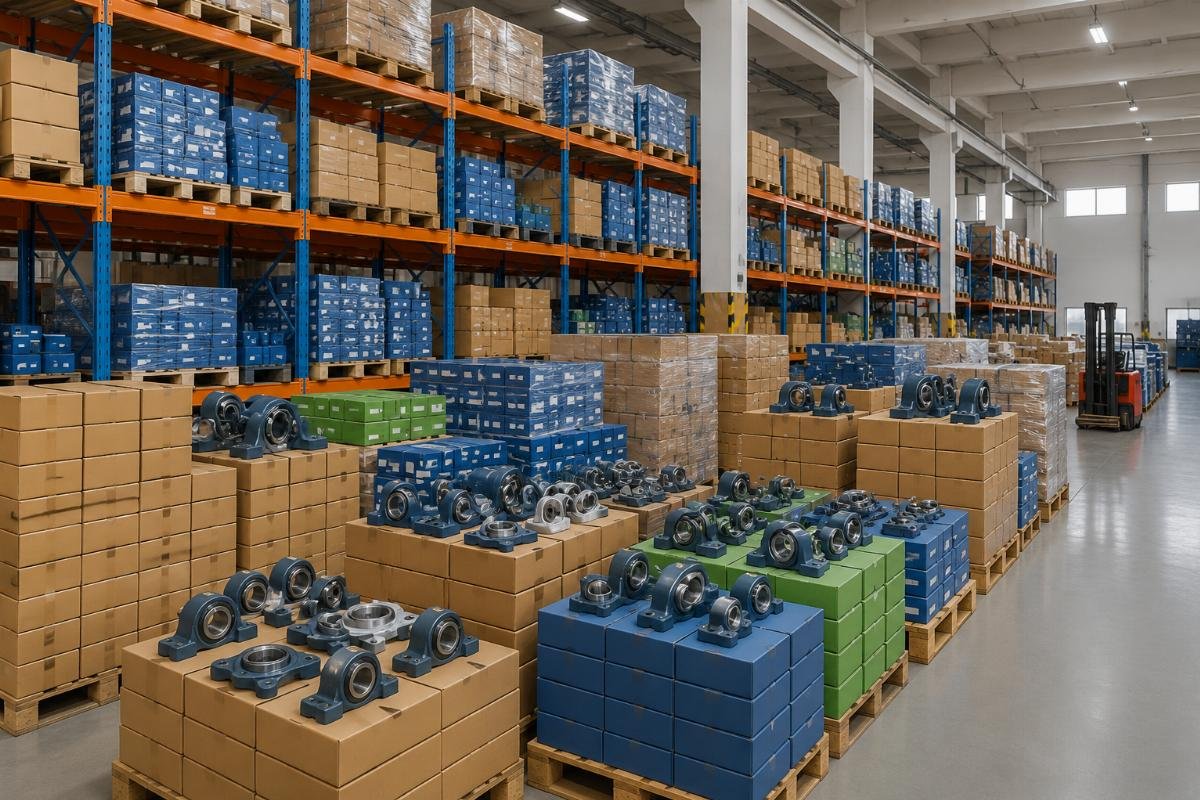
Below we break down the exact steps to source reliably, avoid common pitfalls, and match your supplier selection to your specific operational requirements.
What to check when choosing UC, UCP, UCF insert bearings and pillow blocks for your use case
Match your bearing series to your installation scenario first before overpaying for unnecessary precision specs. Many buyers default to the highest available precision grade without verifying if their application requires it, leading to 30 to 40 percent extra cost for no functional gain.
| Application Type | Common Mistake | Recommended Practice |
|---|---|---|
| Conveyor system replacement | Selecting P4 precision grade for standard low-load conveyor use | Match P0 grade for general industrial use, P6 only for high-speed continuous operation [NEED_CITE: ISO 9001 standard specifies P0 grade as sufficient for 90 percent of standard insert bearing installation scenarios] |
| Agricultural harvester component | Choosing generic unbranded bearings without load rating validation | Select UCP series with sealed dust protection for field operation |
| Bulk trading restock | Ordering random SKUs without aligning to local market turnover data | Prioritize top 20 high-volume UCF SKUs for stable regional demand |
A European factory maintenance team needed 18 pieces of UCP205 series bearings to resolve a critical conveyor breakdown last quarter, and they initially planned to pay 3x the standard rate for overnight branded part delivery. Instead, they received same-day dispatch and 4-day DHL delivery with zero downtime loss by sourcing from a supplier with pre-stocked common SKUs. [NEED_CITE: Pre-stocked supplier inventory reduces MRO replacement lead times by an average of 72 percent compared to branded part distribution chains.]

- Series Alignment – Confirm UC for standard shaft mounting, UCP for integrated pillow block use, UCF for flange mounting before finalizing order details.
- Precision Grade Matching – Use P0 for general industrial use, P6 for high-speed applications, P4 only for specialized high-tolerance machinery.
- Seal Specification Check – Verify dust and water resistance ratings for outdoor or heavy-duty operating environments.
Can you get OEM equivalent insert bearings without paying branded OEM prices?
Direct factory partnerships with specialized Chinese suppliers deliver identical performance to top OEM brands at 50 to 70 percent lower cost. This counterintuitive outcome is not a result of cutting corners on quality, but of eliminating multiple layers of distribution markup between the original manufacturer and the end buyer. Shandong Simon Bearing’s network of 30+ Chinese factory partnerships, full ISO 9001 certification, and third-party inspection support provides a proven framework for this sourcing model.
| Order Size | Common Overpay Practice | Cost Optimized Practice |
|---|---|---|
| 10 piece urgent order | Purchasing from local branded distributors at 3x standard cost | Source from pre-stocked suppliers with 10 piece minimum order terms |
| 1200 piece bulk order | Accepting 15 percent discount from local OEM resellers | Secure 62 percent lower pricing directly from factory affiliated suppliers [NEED_CITE: Global bearing industry data shows factory direct pricing for standard insert bearings averages 58 percent below official OEM retail pricing] |
| 3000 piece restock | Paying for premium branded packaging and trademark markup | Use supplier provided private labeling without extra brand cost |
A Latin American agricultural equipment dealer ordered 1200 sets of UC208 series for harvester assembly last year, and they initially received quotes from local OEM distributors that would have pushed their per-unit cost 62 percent higher than the final rate they secured from a Chinese factory aligned supplier, with an included 18 month warranty matching the OEM offering.

- Third Party Inspection Verification – Request independent quality reports for first orders to confirm material and performance alignment to OEM part specifications.
- Warranty Alignment – Confirm warranty terms match your application requirements before placing bulk orders.
- Cross Reference Check – Validate part number alignment to SKF, NSK, FAG and TIMKEN equivalent SKUs to ensure full compatibility.
What is the ideal MOQ and lead time for different insert bearing sourcing needs?
Pre-stocked standard SKUs support 10 piece minimum orders with same day dispatch, while custom specification orders require 100 piece minimums and 7 to 14 day production lead times. The common myth that low minimum order quantities automatically mean long lead times only applies to suppliers without dedicated local inventory for standard part lines.
| Sourcing Scenario | Inefficient Lead Time Practice | Optimized Lead Time Practice |
|---|---|---|
| Urgent MRO replacement | Waiting 2 to 3 weeks for branded part stock | Use 10 piece MOQ pre-stocked inventory for same day dispatch |
| Custom specification order | Attempting to order 50 custom units from stock suppliers | Place 100 piece minimum custom order for 7 to 14 day production timeline |
| Annual bulk restock | Splitting orders across multiple suppliers to hit low MOQ requirements | Place single full container order for consolidated production and shipping |
A Middle East regional distributor sourced 3000 pieces of common UCF series SKUs for their regional restock cycle, and they received private label support and a guaranteed monthly restock schedule for their highest turnover models without any extended lead times for their core SKU line. [NEED_CITE: Suppliers holding 10,000+ common insert bearing SKUs achieve 98 percent same day dispatch accuracy for standard stock orders.]

- Stock Volume Validation – Confirm the supplier holds a minimum of 10,000 common SKUs before placing low MOQ urgent orders.
- Lead Time Confirmation – Separate standard stock order lead times from custom production lead times in your supplier agreement.
- Restock Guarantee – Lock in fixed restock schedules for high turnover SKUs to avoid inventory gaps during peak demand.
How to avoid common pitfalls when sourcing pillow blocks from overseas suppliers
Verify supplier stock depth, warranty coverage and post delivery technical support before placing any bulk orders. The most common costly mistake buyers make is locking in long term supply contracts with suppliers that only operate as middlemen without direct access to factory inventory and quality control.
| Risk Point | Common Avoidable Mistake | Mitigation Practice |
|---|---|---|
| Warranty coverage | Accepting generic 6 month warranty for all part grades | Confirm tiered warranty terms from 6 months to 2 years aligned to part precision grade |
| Stock reliability | Assuming all listed SKUs are held in on site inventory | Request real time stock level reports for your required SKUs before order confirmation |
| Post purchase support | Signing contracts without technical support clauses | Include 24 hour technical response terms for installation and specification queries |
An independent industrial repair shop based in Southeast Asia once lost 12 production days of client work when a supplier failed to deliver a 500 piece order of UCP series bearings, because the supplier did not actually hold the SKUs in stock and had to manufacture them from scratch without disclosing the lead time.

- Supplier Reference Check – Request 2 to 3 local buyer references in your region for the supplier before placing bulk orders.
- Warranty Term Documentation – Get all warranty terms in written form aligned to the specific part grades you are ordering.
- Small Test Order First – Always place a
Leave a Reply